

 Feed back
 Privacy Policy
Soul's Compass-
The term the zodiac refers to a celestial coordinate system that divides the sky into twelve equal segments along the ecliptic—the apparent path of the Sun across the heavens over the course of a year. Rooted in both astronomy and astrology, this system has evolved over millennia from ancient observational practices into a globally recognized framework for interpreting human personality and cosmic influence. In modern usage, the zodiac is often associated with horoscopes and personal identity, but its historical context reveals a deeper scientific and symbolic foundation.
Across cultures, interest in zodiac signs remains strong, particularly in India, where Vedic astrology continues to play a significant role in daily life, marriage matchmaking (kundali matching), and major life decisions. According to a 2021 survey by the Centre for the Study of Developing Societies (CSDS), over 60% of urban Indians consult astrological charts before weddings or business ventures, reflecting the enduring cultural relevance of these celestial systems.
This article explores the meaning of the zodiac, traces its history of the zodiac from Babylonian origins to contemporary practice, explains how the zodiac wheel explained functions as a symbolic chart, and examines the relationship between the zodiac and astrology—both as belief systems and cultural phenomena. By understanding these elements, readers can appreciate the zodiac not only as a spiritual guide but also as a historical and conceptual tool shaped by centuries of cross-cultural exchange.

At its core, the meaning of the zodiac lies in its function as a celestial map. Astronomically, it represents a belt approximately 8° wide on either side of the ecliptic, through which the Sun, Moon, and visible planets appear to travel. This band is divided into twelve 30-degree sectors, each corresponding to one of the zodiac signs: Aries, Taurus, Gemini, Cancer, Leo, Virgo, Libra, Scorpio, Sagittarius, Capricorn, Aquarius, and Pisces. These signs are not arbitrary; they reflect seasonal patterns and solar positioning observed by early civilizations.
Each zodiac sign carries symbolic meaning derived from mythology, natural elements, and behavioral archetypes. For example:
Additionally, modalities classify signs based on their position within the seasons:
These classifications form a structured language used in astrological interpretation. While modern science does not validate personality predictions based on birth dates, the symbolic consistency of the zodiac offers a coherent framework for self-reflection and psychological insight—a reason why many continue to find value in the zodiac despite skepticism.
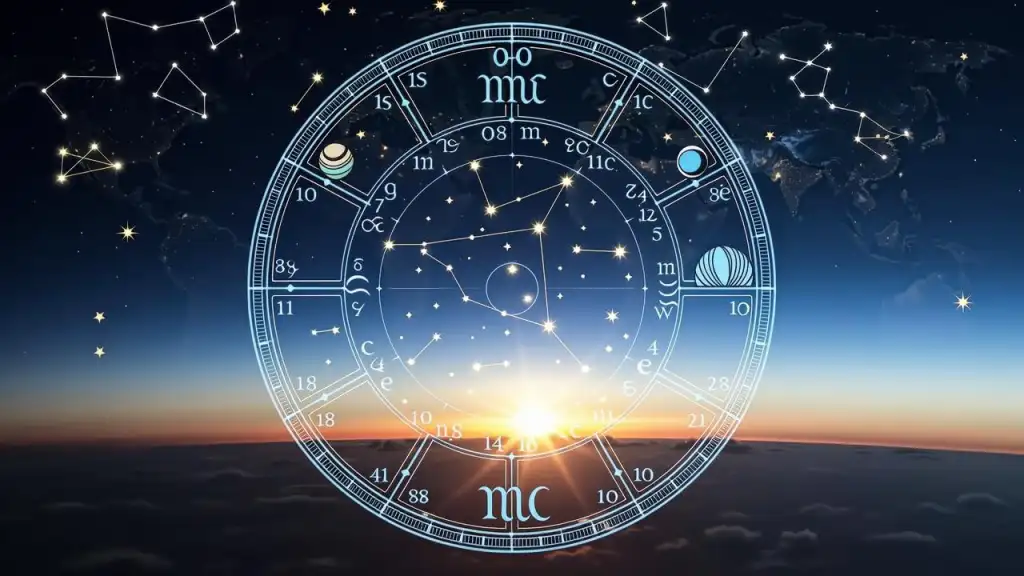
To fully grasp how astrologers interpret celestial influences, it's essential to understand the zodiac wheel explained as a circular diagram known as an astrology chart or natal chart. This wheel is typically divided into twelve sections called "houses," each representing different areas of life such as identity, wealth, relationships, career, and spirituality.
The signs are arranged clockwise around the circle, starting with Aries at the first house and ending with Pisces in the twelfth. The ascendant, or rising sign—the zodiac sign that was rising on the eastern horizon at the moment of birth—determines the starting point of the chart’s layout, making each individual’s wheel unique.
Key angular relationships, known as aspects, further define planetary interactions:
Astrologers analyze the placement of planets like Mercury, Venus, Mars, Jupiter, Saturn, and the luminaries (Sun and Moon) within specific signs and houses to assess personality traits, emotional tendencies, and potential life events. For instance, someone with Mars in Aries may exhibit assertiveness and leadership qualities, while Venus in Libra could indicate a strong desire for harmony and partnership.
Though interpretations vary between traditions, the zodiac wheel serves as a universal template that organizes complex celestial data into an accessible visual format—an innovation that bridges ancient observation with modern symbolic analysis.
The history of the zodiac begins in Mesopotamia, specifically with the Babylonian zodiac developed around the 5th century BCE. Babylonian astronomers identified twelve constellations along the ecliptic and assigned them symbolic meanings tied to agricultural cycles and deities. Their sexagesimal (base-60) number system enabled precise division of the sky into 360 degrees—laying the mathematical groundwork for future developments.
Greek scholars later adopted and refined this system during the Hellenistic period (3rd century BCE – 2nd century CE). Figures like Ptolemy, whose seminal work *Tetrabiblos* compiled astrological knowledge of the time, formalized the tropical zodiac—anchored to the vernal equinox—and emphasized its use in predicting earthly events. This marked the rise of Greek astrology, which combined Babylonian astronomy with Egyptian omens and Greek philosophy.
A pivotal moment in the global spread of the zodiac occurred through cultural exchanges between Greece and India following Alexander the Great’s campaigns. By the early centuries CE, Hellenistic astrological concepts had been integrated into Indian thought, giving rise to Jyotisha, or Vedic astrology. Unlike the tropical zodiac used in Western systems, Vedic astrology employs the sidereal zodiac, which accounts for the precession of the equinoxes—a slow shift in Earth’s axis that causes a drift of about 1° every 72 years.
Today, two primary zodiac systems coexist:
This divergence means individuals may have different sun signs depending on the system used—a key consideration for those exploring their astrological profiles across traditions.
While the zodiac and astrology share historical roots in astronomy, their modern applications differ significantly. In Western astrology, practitioners use the tropical zodiac to generate horoscopes, analyze personality types, and forecast trends. Daily newspaper columns, online apps, and social media content have popularized simplified versions of these readings, especially among younger audiences.
In contrast, Vedic astrology remains deeply embedded in Indian society, influencing critical decisions such as marriage compatibility (based on moon sign alignment), naming ceremonies (Namakarana), and muhurta (electional astrology for auspicious timing). Major institutions like the Indian Council of Astrological Sciences (ICAS) offer certification programs, and some state governments have funded research into astrological correlations, although mainstream scientific communities remain skeptical.
From a scientific standpoint, organizations such as NASA and the American Astronomical Society emphasize that while constellations are real astronomical features, there is no empirical evidence supporting causal links between planetary positions and human behavior. The scientific skepticism toward astrology stems from its lack of falsifiability and reproducible results under controlled conditions.
Nevertheless, the cultural significance of the zodiac persists. A 2023 Pew Research Center study noted that 29% of adults globally believe in astrology to some extent, with higher acceptance rates in South Asia and Latin America. In India, platforms like Clickastro and Astrotalk report millions of monthly users seeking personalized readings, demonstrating the ongoing demand for astrological guidance.
Beyond prediction, many view the zodiac and astrology as tools for introspection and narrative framing—helping individuals make sense of life experiences through metaphor and symbolism. Whether consulted for entertainment, spiritual insight, or decision-making support, the zodiac continues to serve diverse psychological and societal functions.
The journey of the zodiac spans over two thousand years—from its origins in Babylonian astronomy to its integration into Greek astrology and eventual adaptation into Vedic astrology in India. Its evolution reflects humanity’s persistent effort to find order and meaning in the cosmos. Today, the meaning of the zodiac extends beyond mere superstition; it embodies a rich interplay between astronomical observation, cultural tradition, and personal identity.
As explored in the zodiac wheel explained, the structure of the zodiac provides a systematic way to interpret celestial movements, offering a symbolic language used in both Western and Eastern astrological practices. While differences exist—particularly between tropical and sidereal systems—the underlying principle remains consistent: aligning human experience with cosmic rhythms.
Ultimately, engaging with the zodiac and astrology invites a balance between curiosity and critical thinking. For those in India and beyond, it offers more than fortune-telling—it presents a lens through which history, culture, and self-understanding converge. As long as humans look to the stars for meaning, the zodiac will remain a compelling chapter in our shared intellectual heritage.
Disclaimer: The content related to Zodiac discussed in this article is intended for informational purposes only and does not constitute professional advice in any field. Readers are encouraged to make informed decisions based on their personal circumstances and to consult qualified experts when necessary. The author and publisher disclaim any liability arising from the use of this information.
Arjun Mehta
|
2025.11.26


